Tripartite reaffirms support for IMO as global regulator


In light of recent developments, the Tripartite participating organisations reaffirmed their support to the International Maritime Organization (IMO) as the global regulator for international shipping, capable of delivering effective regulations in close collaboration with the maritime community.

The Tripartite Forum of shipbuilders, shipowners and classification societies convened for their annual conference in Busan, South Korea, bringing together more than 70 delegates from 13 countries.

The Tripartite has been meeting for over two decades and has a distinguished record of tackling the most significant engineering challenges, notably initiating the development of the Common Structural Rules for bulk carriers and tankers, Permanent Means of Access for tankers, and the mandatory standards for coating ballast and cargo tanks.

Tripartite’s recent meeting, from 22 to 23 October 2025, continued this tradition with discussions on the more pressing technical issues facing the industry. The range of topics explored in this year’s forum included decarbonisation, onboard carbon capture, autonomous ships, biofouling, ballast water treatment, underwater radiated noise, software maintenance and grey water. Delegates who contributed to the extraordinary session of the MEPC at the International Maritime Organization (IMO) also discussed the implications for the maritime sector, in light of that meeting. On this timely occasion, the Tripartite participating organisations reaffirmed their support to the IMO as the global regulator for international shipping, capable of delivering effective regulations in close collaboration with the maritime community.

IMO’s immediate past Secretary General, Kitack Lim, was a guest of honour at this year’s event and brought with him a depth of knowledge and experience.

On behalf of this year’s organising association International Chamber of Shipping Secretary General, Thomas A. Kazakos, said:

“The shipyards of tomorrow will not only build vessels; they will build confidence in the industry’s ability to meet its sustainability goals. By working closely with classification societies and shipowners, shipbuilders can ensure that the ships of the future are not only compliant with new regulations and fuels but are also designed to operate safely, efficiently, and competitively in an increasingly complex world. Collaboration, foresight, and a continued focus on safety will be the foundation on which the next generation of shipbuilding excellence is built.”

The Tripartite organisations welcomed the progress made in the working groups on Underwater Radiated Noise, Future Proofing of the Maritime Safety Regime, Safe Decarbonisation, Safe Digital Transformation, Ship Life-Time GHG Accounting, Automated Fuel Consumption and Data Gathering.

Next year’s forum will take place in Q4 2026, in Japan.

Ends

Notes to Editors
About ASEF
The Active Shipbuilding Experts’ Federation (ASEF) is an international industry association composed of leading shipbuilding organizations from various countries.
Established with the aim of promoting safety, environmental protection, and technological innovation in the maritime sector, ASEF plays a vital role in advancing global cooperation within the shipbuilding industry.

About BIMCO
BIMCO is the world’s largest international shipping association, with 2,100 members in 120 countries, representing 64% of the world’s tonnage. Our global membership includes shipowners, operators, managers, brokers, and agents. BIMCO is a non-profit organisation.

About CESA
CESA represents the interests of shipbuilding, ship maintenance, repair and conversion shipyards, and maritime equipment providers at the International Maritime Organization (IMO) in London.

About IACS
Dedicated to safe ships and clean seas, the International Association of Classification Societies (IACS) makes a unique contribution to maritime safety and regulation through technical support, compliance verification and research and development. More than 90% of the world’s cargo carrying tonnage is covered by the classification design, construction and through-life compliance Rules and standards set by the twelve Member Societies of IACS.

About INTERCARGO
The International Association of Dry Cargo Shipowners (INTERCARGO) unites and promotes quality dry bulk shipping, bringing together more than 350 forward thinking companies from 35 countries – https://www.intercargo.org

About ICS
The International Chamber of Shipping (ICS) is the principal global trade association for merchant shipowners and operators, representing all sectors and trades and over 80% of the world’s merchant fleet – www.ics-shipping.org

About INTERTANKO
INTERTANKO, the International Association of Independent Tanker Owners, has been the voice of independent tanker owners since 1970, ensuring that the liquid energy that keeps the world turning is shipped safely, responsibly and competitively. As of January 2025, the organisation has 178 Members, whose combined fleet comprises over 3,800 tankers totalling over 355 million dwt. INTERTANKO’s Associate Membership stands at some 220 companies and organisations related to the tanker industry. www.intertanko.com

About SEA Europe
SEA Europe represents close to 100% of the European shipbuilding industry in 17 nations, encompassing the production, maintenance, repair, and conversion of all types of ships and floating structures, commercial as well as naval, including the full supply chain with the various producers of maritime systems, equipment material, and services.
SEA Europe’s membership is situated in EU Member States, Norway, Turkey, United Kingdom and Ukraine.
As an NGO observer at the International Maritime Organisation (IMO), CESA represents the shipbuilding industry and its supply chain from EU Member States, Norway, and Turkey.

IACS Publishes New Recommendation, Rec.182 to Support Onshore Power Supply Systems

The shift towards decarbonisation has placed a spotlight on reducing emissions from sea going vessels while at ports, where vessels often rely on auxiliary engines that contribute to GHG emissions. Onshore Power Supply (OPS), commonly referred to as “cold ironing” or shore-to-ship power has emerged as a promising solution, allowing vessels to connect to a land-based electrical grid while at berth, enabling their onboard generators to be switched off. This significantly reduces NOx (nitrogen oxides) and SOx (sulfur oxides) emissions, and particulate matter in port areas, contributing to cleaner air and healthier port communities.

Recognising the critical role of OPS in achieving global decarbonisation targets, the International Association of Classification Societies (IACS) has published recommendation, Rec. 182, a comprehensive framework to support the effective adoption of OPS systems. This recommendation provides detailed guidance for ship designers, builders, operators, and owners on integrating OPS systems into both newbuilds and retrofits, while addressing the technical and operational challenges associated with its implementation. This initiative not only aligns with the industry’s environmental and safety objectives but also supports the International Maritime Organization’s (IMO) MSC.1/Circ.1675—Interim Guidelines on the Safe Operation of Onshore Power Supply (OPS) Service in Port for Ships Engaged on International Voyages. By emphasising interoperability, safety, and efficiency, it aims to ensure a seamless integration of this technology and outlines the following aspects to facilitate its adoption:

Ship Requirements for OPS: Ships engaged in international voyages should be equipped with ship-side installations capable of accepting shore power. This includes incoming power receptacles, shore connection switchgear, and necessary protections to ensure compatibility with shore-side systems.

Ship-to-Shore Connection Protocols: The recommendation outlines specific protocols for the connection of ship-side and shore-side systems, emphasizing the need for dedicated ship-side circuit installations to manage the connection and disconnection of power safely.

Testing Procedures for First Connection: At the first call at a shore supply point, ships should undergo mandatory tests, including visual inspections, insulation resistance measurements, functional tests of protection devices, and integration tests to ensure proper operation between ship and shore installations.

Periodic Testing Requirements: If the time between repeated port calls does not exceed 12 months and no modifications have been made, only limited verification tests are required. However, if the interval exceeds 12 months, comprehensive testing as outlined in the document should be conducted.

Operational Safety Measures: The recommendation emphasizes the importance of safety precautions during OPS operations, including the use of personal protective equipment (PPE), adherence to “lock out/tag out” procedures, and ensuring effective communication between ship and shore personnel during power connection and disconnection.

Documentation of OPS Procedures: Ships are required to maintain detailed documentation of OPS operation procedures, including circuit diagrams, compatibility assessments, and emergency shutdown protocols. This documentation is crucial for ensuring safe and efficient operations.

Pre-Connection Checklist: A comprehensive pre-connection checklist should be completed prior to connecting to shore power. This checklist should cover operational limitations, communication methods, and contact information for personnel in charge (PICs) to ensure all safety measures are in place.

Maintenance and Testing Plans: The planned maintenance program for OPS systems should include periodic testing and maintenance procedures to ensure ongoing reliability and safety of the equipment. This includes regular inspections and functional tests of all critical components.

Quality Assurance of Shore Supply: The recommendation highlights the necessity of assessing the quality of the shore power supply, including total harmonic distortion (THD) and voltage stability, to prevent potential damage to shipboard electrical systems and ensure a reliable power source during operations.

This recommendation addresses a long-standing need for standardised guidance to support the adoption of OPS systems, as voiced by maritime stakeholders. By aligning with the industry’s overarching goal of reducing ship-related pollution and enhancing operational safety, IACS aims to contribute to the development of sustainable ports and better shipping practices.

Commenting on the recommendation, IACS Machinery Panel Chair, Amir LOTFOLAZADEH stated, “The introduction of Rec. 182 underscores IACS’ commitment to advancing sustainable and safe maritime practices. We recognize the importance of shore power in achieving pollution reduction goals and are confident this guidance will drive the adoption of OPS systems industry-wide.”

Available now on the IACS website, this recommendation serves as a critical resource for all stakeholders, including shipyards undertaking vessel retrofits, designers creating future-ready ships, and operators working to meet regulatory and environmental objectives.

Ends/

Contact: Robert Ashdown, IACS Secretary General
E: robertashdown@iacs.org.uk T: +44 (0) 20 7976 0660

International Association of Classification Societies
Permanent Secretariat 4 Matthew Parker Street, London, England SW1H 9NP

E: permsec@iacs.org.uk

T: +44 (0)20 7976 0660

Notes to Editors:

  1. Dedicated to safe ships and clean seas, the International Association of Classification Societies (IACS) makes a unique contribution to maritime safety and regulation through technical support, compliance verification and research and development. More than 90% of the world’s cargo carrying tonnage is covered by the classification design, construction and through-life compliance Rules and standards set by the twelve Member Societies of IACS.
  2. More information about IACS can be found by visiting iacs.org.uk and in our Annual Review available online at http://www.iacs.org.uk/about/iacs-annual-review/

IACS 2025 BLUE BOOK LAUNCHED

The latest release of the Blue Book package continues to enhance IACS technical support to the shipping industry through our work and investment in technology, innovation, research and development both at the classification and statutory levels.

The IACS Blue Book is an electronic library of all technical resolutions adopted by IACS as a result of its technical work and remains the core reference work for the Association containing, as it does, all previous revisions of IACS publications and historical data. It is updated and published once a year. Together, these IACS publications illustrate well how the aims and objectives of IACS are delivered for the benefit of international shipping and contain:

  • IACS Unified Requirements which IACS members incorporate into their Rules.
  • Unified Interpretations of IMO convention requirements which IACS Members apply uniformly when acting on behalf of authorizing flag Administrations, unless instructed otherwise.
  • Procedural Requirements governing practices among IACS Members.
  • Recommendations relating to adopted resolutions that are not necessarily matters of Class but which IACS considers would be helpful to offer some advice to the marine industry.
  • Quality Documents containing QSCS (IACS’ Quality System Certification Scheme) description, Quality Management System Requirements, Audit Requirements, ACB (Accredited Certification Bodies) requirements and other quality procedures.
  • IACS Charter and IACS Procedures which define the purpose, aim and working procedures of the Association.

These publications are of interest to Ship Designers, Consultants, Shipbuilders, Classification Societies, Ship-owners, Shipbrokers, Insurers, Associations, Accredited Certification Bodies, flag States, Port State Control, MOUs and the shipping industry at large and are available for download, free of charge, at https://iacs.org.uk/resolutions/blue-book .

Ends/

Contact: Robert Ashdown, IACS Secretary General
E: robertashdown@iacs.org.uk T: +44 (0) 20 7976 0660

International Association of Classification Societies
Permanent Secretariat 4 Matthew Parker Street, London, England SW1H 9NP

E: permsec@iacs.org.uk

T: +44 (0)20 7976 0660

Notes to Editors:

  1. Dedicated to safe ships and clean seas, the International Association of Classification Societies (IACS) makes a unique contribution to maritime safety and regulation through technical support, compliance verification and research and development. More than 90% of the world’s cargo carrying tonnage is covered by the classification design, construction and through-life compliance Rules and standards set by the twelve Member Societies of IACS.
  2. More information about IACS can be found by visiting iacs.org.uk and in our Annual Review available online at http://www.iacs.org.uk/about/iacs-annual-review/

IACS Introduces Recommendations to Enhance Safety Standards for Surveyors, Rec. 184

Its people are any Class Society’s most valuable resource and their health and safety is paramount. In particular, protecting Class Surveyors who are often faced with various occupational health and safety (OHS) risks, requires robust measures to address the challenges they face during inspections and surveys. Recognising the critical need to address these risks, the International Association of Classification Societies (IACS) has published guidelines on safety standards for work, Rec. 184. With a focus on collaboration and sharing of experiences, this comprehensive document offers a structured approach aimed at enhancing safety practices, reducing incidents, and promoting uniform safety practices across the industry.

Designed to creating safer working conditions for surveyors and all personnel engaged in maritime operations, these guidelines outline critical measures to mitigate risks and addresses key areas such as risk assessments and situational awareness, ensuring that they are equipped to handle the hazards they may encounter.

By introducing these guidelines, IACS aims to enhance OHS standards, prioritising the safety and well-being of surveyors and all associated personnel. This initiative supports the development of consistent OHS practices across classification societies and contributes to a safer and more sustainable maritime industry.

Key highlights of the guidelines include:

Comprehensive Risk Management: The document provides guidance for surveyors to exercise appropriate risk assessment and situational awareness prior to commencing work for prevention of accidents, near-misses, injury or ill health to surveyors, associated personnel and damage to property.

Increased Focus on Collaboration: IACS encourages surveyors to share experiences and safety challenges to improve the overall safety culture across the maritime industry.

Fitness for Work: The guidelines emphasize the importance of physical and mental readiness, including undertaking all periodical medical checkups required by their society.

Fatigue Management: The guidelines stress the importance of ensuring adequate rest to prevent fatigue, which can impair performance and increase the risk of accidents.

  Empowering Surveyors to Use Stop Work Authority: Surveyors are empowered to stop work if they believe safety conditions are at risk, ensuring that corrective measures are taken before continuing with tasks.

Use of Personal Protective Equipment (PPE): The guidelines mandate the use of appropriate PPE and provide instructions on the maintenance and replacement of worn or damaged gear.

Standardised Safety Practices: The guidelines reinforce the importance of uniform safety practices, ensuring that surveyors adhere to a consistent set of safety protocols regardless of the work environment.

The guidelines further address activities that pose elevated OHS risks for surveyors, providing tailored recommendations to enhance safety. These include working at height, transfers between boats, and performing surveys in confined spaces or using rafts. The document also covers managing pressure tests, control of stored/electrical energy, and participation in sea trials. Additionally, it highlights precautions for exposure to extreme weather conditions, hazardous materials, and travel-related safety concerns, ensuring surveyors are equipped to navigate the varied risks associated with their roles.

The guidelines are now available on the IACS website and serve as a valuable resource for surveyors, classification societies, and industry stakeholders aiming to uphold the highest standards of safety.

Ends/


Contact: Robert Ashdown, IACS Secretary General
E: robertashdown@iacs.org.uk T: +44 (0) 20 7976 0660

International Association of Classification Societies
Permanent Secretariat 4 Matthew Parker Street, London, England SW1H 9NP

E: permsec@iacs.org.uk

T: +44 (0)20 7976 0660

Notes to Editors:

  1. Dedicated to safe ships and clean seas, the International Association of Classification Societies (IACS) makes a unique contribution to maritime safety and regulation through technical support, compliance verification and research and development. More than 90% of the world’s cargo carrying tonnage is covered by the classification design, construction and through-life compliance Rules and standards set by the twelve Member Societies of IACS.
  2. More information about IACS can be found by visiting iacs.org.uk and in our Annual Review available online at http://www.iacs.org.uk/about/iacs-annual-review/

IACS PARTICIPATION AT SSE 11

In demonstrating its ongoing commitment to supporting the work of the International Maritime Organization (IMO), and within its remit as the Organization’s principal technical advisor, IACS will actively participate in the forthcoming 11th session of the Sub-Committee on Ship Systems and Equipment (SSE 11) which will meet from 24 to 28 February 2025.

Noting the work IACS Members undertake as recognized organizations of IMO Member States, verifying compliance of ships with IMO agreed requirements, and with a view to achieving clarity for all parties, IACS has submitted the following documents:

SSE 11/4/2 seeks clarification on the scope of application of the draft amendments to paragraph 4.7.6.4 of the LSA Code relating to the simulating launching of free-fall lifeboats and opines that the amendments were not intended to apply retrospectively;

SSE 11/9 proposes that the existing explanatory figures from MSC circulars which provide guidance on SOLAS regulation II-2/9 be compiled into a new guidance document, for example, an MSC circular, if the guidance text is lifted into SOLAS regulation II-2/9;

SSE 11/9/1 proposes to consider the existing IACS guidance when amending SOLAS regulation II-2/9 to clarify requirements, eliminate ambiguities and make the regulation more comprehensive;

SSE 11/INF.3 informs about IACS unified interpretations which have not been published as IMO circulars, but which may be useful in the review and update of SOLAS regulation II-2/9;

SSE 11/10/1 presents Revision 1 of IACS UI SC 211, which provides unified interpretations of SOLAS regulations II-2/3.6 and II-2/4.5.1.1 to facilitate uniform consideration of spaces in the forecastle area protected from cargo tanks;

SSE 11/10/2 presents IACS unified interpretation SC 307 of SOLAS regulation II-2/4.5.10 regarding the protection of cargo pump-rooms;

SSE 11/10/3 provides revision 2 of IACS UI SC 269 containing a unified interpretation of SOLAS regulation II-2/13.4.2 relating to the means of escape from the steering gear spaces in cargo ships;

SSE 11/10/4 presents IACS unified interpretation (UI) SC11 of the vague phrase “other high fire risk areas” in SOLAS regulation II-1/45.5.3 relating to the precautions against shock, fire and other hazards of electrical origin. The intention is to clarify which areas the cables and wiring serving essential or emergency power, lighting, internal communications or signals should be routed clear of, so far as practicable;

SSE 11/10/5 responds to the outcome of SSE 10 and proposes a revised draft unified interpretation of SOLAS regulation II-1/3-13.2.4 to facilitate uniform documentation of load testing and thorough examination for existing non-certified lifting appliances;

SSE 11/10/6 contains the new IACS UI SC305 (New), which recognizes the related decision of MSC 109 and provides unified interpretation of SOLAS regulation II-1/26.2 applicable to cargo and passenger ships to facilitate uniform consideration relating to single essential propulsion components and their reliability;

SSE 11/10/7 proposes a unified interpretation of SOLAS regulation II-2/10.11, relating to the extinguishing media containing PFOS, and a unified interpretation of regulation 7.9.4 of the 1994 and 2000 HSC Codes, relating to the fire-extinguishing media restrictions;

SSE 11/17/1 proposes to include the output “Revision of the Revised guidelines for the maintenance and inspections of fixed carbon dioxide fire-extinguishing systems (MSC.1/Circ.1318/Rev.1) to clarify the testing and inspection provisions for CO2 cylinders” in the provisional agenda for SSE 12;

SSE 11/17/2 proposes placing the post-biennial output on “Revision of the Guidelines for the application of plastic pipes on ships (resolution A.753(18))”, on the provisional agenda for SSE 12 and offers the scope of its revision in several aspects in order to reduce potential ambiguities and deviation from the current state of the art;

SSE 11/17/3 proposes to include the output “Development of amendments to paragraph 2.1.2.5 of chapter 5 of the FSS Code on construction requirement for gaskets” in the provisional agenda for SSE 12 and offers a proposal for consideration at that session to revise paragraph 2.1.2.5 of chapter 5 of the FSS Code to align the construction requirement for gaskets used in discharge piping inside protected spaces, with other IMO instruments;

SSE 11/19/1 highlights minor discrepancies between the LSA Code and ISO Standard 18813 (2006 and 2022 versions).

Any enquiries on the above should be sent to Mr Konstantin Petrov, IACS Accredited Representative to IMO, at arimo@iacs.org.uk

IACS Publishes New Recommendation on 3D Printing for Marine and Offshore Applications

24 March 2025 – The International Association of Classification Societies (IACS) has published a new recommendation, Rec.186, that meets the need for a standardised approach to integrating Additive Manufacturing (AM), commonly referred to as 3D printing, into marine and offshore applications.

The maritime industry continues to embrace developments in manufacturing technologies to enhance efficiency and sustainability in shipbuilding and offshore operations. Additive Manufacturing (AM) has emerged as an alternative to traditional manufacturing processes by fusing materials to produce objects from a digital 3D model into a series of 2D cross sections for layer-by-layer physical prints, ultimately producing a 3D object. Unlike conventional methods such as casting, forging, and welding, AM offers greater design freedom, reduced material waste, and the potential for on-demand production. Its flexibility allows for localised production and customisation, providing tailored solutions for specialised marine and offshore applications.

Rec. 186: Additively Manufactured Metallic Parts for Marine and Offshore Applications’ establishes a framework for the qualification, approval, and certification of additively manufactured metallic parts. This recommendation provides detailed guidance for key aspects of the AM process, including part design, feedstock selection, AM processes, post-processing, and inspection/testing. By incorporating recognized international standards such as ISO/ASTM 52900 and AWS D20.1, it aligns AM technology with existing Unified Requirements, particularly UR W for materials and welding, ensuring equivalent reliability and safety.

To facilitate the safe and effective adoption of AM in the marine sector, the recommendation outlines the following key areas:

  • Scope of AM Process:The recommendation covers Powder Bed Fusion (PBF), Directed Energy Deposition (DED), and Binder Jetting (BJT), with detailed process-specific parameters.
  • Criticality Levels and Testing:Introduces tiered testing levels (AM Levels 1-3) for class and certified items, enabling customised testing based on application criticality.
  • Feedstock and Material Standards:Specifies rigorous qualification processes for AM feedstocks, including powder, wire, and binder feedstocks, including recycling protocols for sustainability.
  • Part Design and Qualification:Includes innovative provisions for design optimisation, topology adjustment, and pre-build simulation to ensure robust performance under marine conditions.
  • Inspection and Non-Destructive Testing (NDT):Addresses anisotropic properties and potential imperfections (e.g., porosity, lack of fusion) through advanced NDT methods like CT scans.

Rec. 186 establishes a robust verification and certification framework, ensuring the safe and effective use of AM technology in critical marine contexts. Moving forward, IACS will continue to collaborate with stakeholders to expand the application of AM in safety-critical marine components. By encouraging shipyards, original equipment manufacturers (OEMs), and vessel operators to adopt AM, it paves the way for innovation in shipbuilding and offshore engineering, marking a pivotal step in the safe and standardized adoption of additive manufacturing.

Commenting on the publication of Rec. 186, Alexandre Astruc, Chair of IACS’ Expert Group on Materials & Welding, said:

“Additive manufacturing, or 3D printing, is increasingly becoming a valuable tool for the marine sector, offering a flexible, speedy and customisable solution for environments where the consequences for safety, sustainability or operational uptime can otherwise be significant. While its potential for rapid production is notable, its true strength lies in its ability to provide innovative, on-demand solutions tailored to complex maritime challenges. In developing Rec 186, IACS is seeking to safeguard the benefits offered by additive manufacturing by ensuring it is underpinned by a standardised framework for verification and certification that gives confidence to all parties.” 

For full details on Rec. 186, please visit here.

About IACS

Dedicated to safe ships and clean seas, the International Association of Classification Societies (IACS) makes a unique contribution to maritime safety and regulation through technical support, compliance verification and research and development. More than 90% of the world’s cargo carrying tonnage is covered by the classification design, construction and through-life compliance Rules and standards set by the twelve Member Societies of IACS.

More information about IACS can be found by visiting www.iacs.org.uk and in our Annual Review available online at https://iacs.org.uk/about-us/annual-review.

IACS Publishes 2024 Annual Review, with focus on safety first

Report highlights role of IACS and its members in developing technical rules and guidance to meet new and emerging safety issues facing global shipping

31 March 2025 – IACS, the membership organisation for the world’s leading classification societies, has published its 2024 Annual Review, which highlights the central role played by IACS in supporting safety standards in global shipping.

In a year that marked the 50th anniversary of the adoption of the SOLAS Convention, safety was at the forefront of IACS’s work programme for 2024. This was exemplified by the new Safe Digital Transformation Panel, which began its important work to identify and mitigate any safety risks posed by shipping’s ongoing digital transformation.

Technical and digital advances featured heavily in IACS’s programme for 2024, including the significant challenge posed by new technologies and alternative fuels when it comes to the safety and reliability of engines and other onboard systems. IACS’s work in emerging fields was further highlighted by its work on remote surveys, which included the development of a new Unified Requirement to ensure uniform standards in the conduct of surveys undertaken without the presence of a surveyor.

The report also highlights other areas of important work, including safety standards for gas carriers, improvements to the implementation of the Safe Return to Port (SRtP) scheme for passenger ships, and further guidance to support compliance with ballast water management system (BWMS) standards. 2024 also saw extensive consultation with industry and Flag States on the ongoing comprehensive review of the IACS Common Structural Rules, which will continue into 2025 and until their expected adoption in four years’ time.

Although digital and technological innovation has been a core focus of IACS’s work, the human element has remained at the heart of IACS safety agenda. As the report explores, IACS has continued to invest heavily in training and guidelines that support the role of people, including the risks posed to and by people in a ship’s lifecycle.

Robert Ashdown, IACS Secretary General, commented: “2024 was an extremely busy year for IACS, which saw us deliver a diverse work programme, with safety at the heart of all we do, whether that was through our strong presence at IMO, our close collaboration and engagement with industry partners, or our new and revised rules, recommendations and guidance. Through the collective efforts of our team and our members, IACS is playing a significant role upholding our purpose of safer, cleaner shipping.”

Roberto Cazzulo, Chair of the IACS Council, said: “At a time of transformation for our industry, IACS has been at the forefront of setting the standards needed to keep vessels safe and to protect the environment, particularly when the world around us is being reshaped by digitalisation and decarbonisation. This pace of change also requires an agile, rapid response in order to address the technical and safety implications for shipping. Throughout 2024, IACS and our members proved their ability to deliver the expert guidance needed by our industry to help safeguard safety at sea.”

The report recognises IACS’s extensive programme of engagement and support for industry at a technical and strategic level with a wide range of regulatory authorities, representative bodies and other stakeholder groups, most notably at the IMO, where IACS works closely with the secretariat and member states to deliver on the shared safety vision of both organisations. In 2024, the collective contribution from IACS and its members resulted in 77 submissions to IMO, along with the co-sponsorship of a further 12 papers.

IACS also plays an important role as a convenor and partner with industry stakeholders through other initiatives, such as the Joint Industry Working Group (JIWG) on Safe Decarbonisation, which was established last year. Through regular technical meetings and workshops, the feedback and insight from these discussions has fed directly into IACS’s rules and recommendations.

Over 2024, IACS adopted 85 new or revised Resolutions and Recommendations for

implementation by its members, and the Annual Review provides a full list of all these, as well as those withdrawn. It also includes the ‘Class Report 2024’, which contains data on the global IACS fleet, broken down by the 12 IACS members.

The 2024 Annual Review is available for download at the IACS website at https://iacs.org.uk/about-us/annual-review. Hard copies are also available on request from the IACS Permanent Secretariat at permsec@iacs.org.uk.

Notes to Editors

For further information, please contact: IACS@blue-comms.com

About IACS

Dedicated to safe ships and clean seas, the International Association of Classification Societies (IACS) makes a unique contribution to maritime safety and regulation through technical support, compliance verification and research and development. More than 90% of the world’s cargo carrying tonnage is covered by the classification design, construction and through-life compliance Rules and standards set by the twelve Member Societies of IACS.

More information about IACS can be found by visiting www.iacs.org.uk and in our Annual Review available online at https://iacs.org.uk/about-us/annual-review.


IACS PARTICIPATION AT MSC 110

In demonstrating its ongoing commitment to supporting the work of the International Maritime Organization (IMO), and within its remit as the Organization’s principal technical advisor, IACS will actively participate in the forthcoming 110th session of the Committee on Maritime Safety (MSC 110) which will meet from 18 to 27 June 2025.

Noting the work IACS Members undertake as recognized organizations of IMO Member States, verifying compliance of ships with IMO agreed requirements, and with a view to achieving clarity for all parties, IACS has submitted the following documents:

MSC 110/3/5 comments on document MSC 110/3 by the IMO Secretariat, pertaining to draft amendments to SOLAS regulations II-1/2.29, II-1/56 and II-1/57 and proposes an editorial improvement to the draft amendments to SOLAS regulation II-1/56.1;

 MSC 110/5/7 proposes a new draft text and restructuring of chapter 22 of the MASS Code (Special measures to enhance maritime security). Proposed amendments to the existing draft include functional requirements addressing the security of the remote operations centre (ROC), autonomous vessels, automated security technologies, and the expansion of the applicability of the ISPS Code to include remote operators and ROCs. In addition, the co-sponsors suggest that a review of cyber security provisions within the MASS Code is conducted upon completion to ensure that this topic is adequately addressed;

MSC 110/6/4 considers that the Code of Safety for Nuclear Merchant Ships, adopted in 1981, is outdated and a barrier to positive technology developments. The documents proposes that the Code needs revision to establish relevant international standards to guide development and allow for timely deployment of advanced reactor technologies that could power zero-emission ships;

MSC 110/6/6 proposes amendments to the definition of “low-flashpoint fuel” in SOLAS regulation II-1/2.29 and consequential amendments to SOLAS chapter II-1 and the IGF Code;

MSC 110/7 proposes the development of a goal-based approach to maritime digital-ecosystem cybersecurity standards, capturing cyber risk management for port facilities, shipping and logistical systems that support global networks. This provides a next step in the development of a global approach following the agreement at MSC 109 of the need for further development of cybersecurity standards for ships and port facilities at MSC 110;

 MSC 110/11/1 comments on document MSC 110/11 by the IMO Secretariat and proposes that the scope of the output on the revision of the “Interim guidelines for the use of Fibre-Reinforced Plastics (FRP) elements within ship structures: Fire safety issues (MSC.1/Circ.1574)” be limited to the fire safety aspects in relation to SOLAS regulation II-2/17 on alternative design, and not widened to include considerations related to global strength;

MSC 110/11/2 comments on document MSC 110/11 by the IMO Secretariat and proposes a revision of MSC.1/Circ.1511/Rev.1 on Unified interpretations of SOLAS regulations II-2/9 and 13 to reflect the confirmation by SDC 11 regarding the term “lower part” used in SOLAS regulations II-2/13.4.1 and 13.4.2 in connection with the means of escape from spaces below the bulkhead deck;

MSC 110/14/3 comments on document MSC 110/14/1 by the IMO Secretariat and proposes that the draft amendments outlined in its annex be considered with regard to their potential long-term impact on the clarity of the LSA Code and other mandatory codes;

 MSC 110/18/3 proposes a new output to amend SOLAS regulation II-2/4 and relevant recommendations (MSC.1/Circ.1321) in respect of arrangements for oil fuel, lubrication oil and other flammable oils to reduce the possibility of engine-room fires originating from leakages in low-pressure fuel pipes and lubrication oil pipes;

 MSC 110/18/11 proposes a new output to amend SOLAS regulation II-2/6.2.1 to address the testing requirements for the floor covering materials, with a view to ensuring consistent implementation;

MSC 110/18/12 proposes a new output to amend SOLAS regulations II-2/20.6.1.4 and 20.6.1.5, as well as chapters 6 and 7 of the International Code for Fire Safety Systems (FSS Code), as amended by resolution MSC.206(81), to align them with the requirements of SOLAS regulations II-2/20.6.1.1 to 20.6.1.3;

MSC 110/18/14 proposes a new output to develop amendments to MSC.1/Circ.1321 on Guidelines for measures to prevent fires in engine-rooms and cargo pump-rooms to include provisions for the use of thermal imaging cameras;

MSC 110/18/15 provides a review and reclassification of 7,602 historical reportable occurrences that has highlighted shortcomings in the taxonomy used in MSC-MEPC.3/Circ.4/Rev.1 on Revised harmonized reporting procedures – Reports required under SOLAS regulations I/21 and XI-1/6, and MARPOL, articles 8 and 12 which now forms the basis of reports made to the Marine Casualties and Incidents (MCI) module in GISIS. In this context, this document proposes a new output to review the circular, which was issued in 2014, as soon as practicable;

MSC 110-INF.7 provides a status report on GBS audit observations common to IACS members as of 28 February 2025;

MSC 110-INF.15 provides an update of document MSC 96/INF.6 by France and Germany. It evaluates the safety level of bulk carriers from 1978 to 2024 based on the analysis of accident data. The risk to crew has decreased significantly across most accident categories, which is attributed partially to IMO and IACS safety measures. Historical potential loss of life (PLL)* values are lower than previously predicted indicating safety has improved beyond initial expectations. Overall, the document demonstrates the positive impact of regulatory changes and safety initiatives on enhancing bulk carrier safety over the past decades.

 Any enquiries on the above should be sent to Mr Konstantin Petrov, IACS Accredited Representative to IMO, at arimo@iacs.org.uk

IACS progress on safe decarbonisation and safe digital transformation highlighted at Council meeting in Beijing

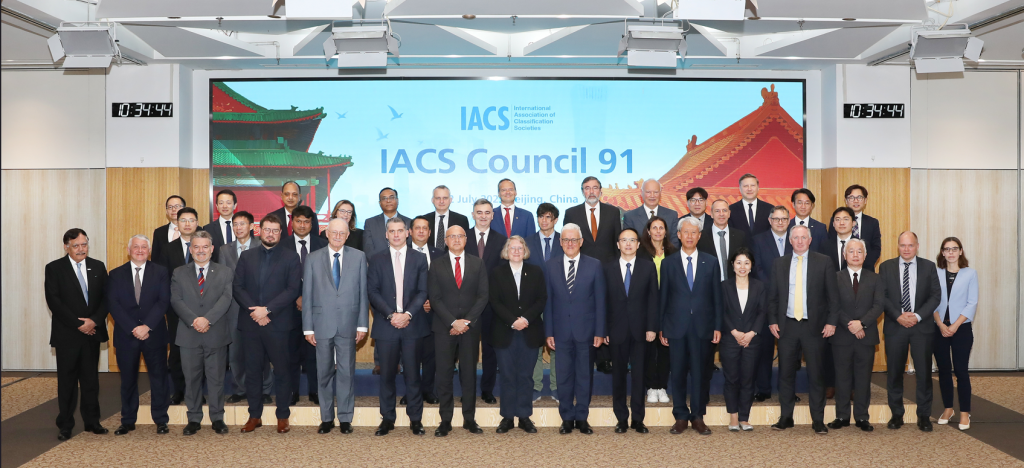
The IACS Council met in Beijing last week (C91) to assess and advance the Association’s progress on the safe decarbonisation and digital transitions, on the further development of Common Structural Rules, and on the many joint initiatives currently underway with industry partners. 

C91 also took the first steps towards integrating Environmental, Social and Governance (ESG) principles into IACS’ governance.  The Council further agreed an internal framework of structured engagement with the International Quality Assessment Review Body (IQARB) to ensure IACS support for its objectives.

Three years after the launch of its Safe Decarbonisation Panel, the IACS Council welcomed the rapid progress made in developing technical guidance across a range of key technologies that support the introduction of new fuels and technologies on both new builds and the existing fleet.   In line with IACS’s technology-neutral approach, IACS instruments now cover Ammonia, Methanol, Hydrogen, Batteries and Carbon Capture, while also working with flag States on matters such as Gas Dispersion Analysis and risk assessments for alternative fuels as required by the IGF code.  The Council also welcomed IACS’ preliminary work in assessing its potential role in the introduction of nuclear technologies.

The more recently constituted Safe Digital Transformation Panel (Jan ’24) has been no less active and C91 welcomed the valuable work undertaken to clarify IACS’ role in digitalisation, cyber systems and marine autonomous surface ships, and in sharing these important conceptualisations with IMO at its FAL49 meeting earlier this year in support of its comprehensive digitalization strategy.

IACS Council also highlighted the development of IACS Resolutions on a diverse range of digital issues including cybersecurity controls for existing ships, vessel asset inventory for computer-based systems, classification of complex systems which utilize computer-based systems, a protocol on format definition and exchange of 3D model, risk assessment for MASS (Maritime Autonomous Surface Ships), and communications and remote connectivity for MASS.

IACS Council recognised the close interaction with other industry bodies in these areas, noting the work with CIMAC to advance digital discussions at IMO, with BIMCO on automated Fuel Consumption Data Gathering (to name just two) and IACS’ involvement in the many Joint Industry Working Groups, ranging from Anchoring Equipment to Underwater Radiated Noise.

The further development of the Common Structural Rules (CSR) were discussed at C91, where Council reviewed the input received from the extensive and ongoing consultation exercise that is being undertaken with industry.  C91 noted the intensive efforts that had been made to provide additional, detailed technical background data and explanations to the many and varied questions raised.  Council further recognized that it was incumbent on IACS to demonstrate to all stakeholders that the revised CSR would deliver the same or greater level of safety as the current rules.  C91 noted that providing this level of confidence would best be achieved by finalising the consequence assessment based on a list of suitable vessels that represented a good proportion of the Oil Tanker and Bulk Carrier fleets.

Reaffirming its commitment to working with industry throughout the CSR review process, Council noted that allowing industry adequate time to comment on the results of the Consequence Assessments meant that the previously announced timetable for adoption of the new CSR should now be considered as indicative only, and this would be kept under active review pending further feedback.

On other matters at C91, IACS Council discussed integrating Environmental, Social and Governance (ESG) principles into the governance of the association.  Recognising that many IACS Members have their own ESG policies, C91 agreed that in developing these principles, they would apply to the activities IACS undertakes as an association and their objectives would need to be closely integrated to IACS’ core mission of safety and environmental protection.

IACS relationship with the International Quality Assessment Review Body (IQARB) was also discussed. Noting its new legal status, independence and ever-greater recognition by IMO and individual flag States, Council emphasised the importance of IACS continuing to play a leading role in its ongoing development and was pleased to adopt a comprehensive framework document that will govern how IACS can continue to provide expert input and guidance  to the IQARB.

Commenting on discussions at C91, IACS Council Chair, Roberto Cazzulo, said, ‘IACS ability to deliver on its core mission of delivering substantive, detailed, technical contributions to the full range of industry discussions was reflected in the range of IACS instruments that C91 was invited to consider.  Our Association’s sustained leadership can be seen in our discussions on the decarbonisation and digital transitions, ESG and IQARB, while our commitment to working with industry partners manifests itself in our strong commitment to joint industry groups and in our flexible, responsive approach to evolving the Common Structural Rules.”

The IACS Council meets twice a year and this was the 91st Council meeting since the founding of IACS in 1968. This meeting took place in Beijing, kindly hosted by the China Classification Society, and was attended by senior representatives of all 12 Members.

Ends/

Contact: Robert Ashdown, IACS Secretary General
E: robertashdown@iacs.org.uk T: +44 (0) 20 7976 0660

International Association of Classification Societies
Secretariat 4 Matthew Parker Street, London, England SW1H 9NP

E: secretariat@iacs.org.uk

T: +44 (0)20 7976 0660

Notes to Editors:

  1. Dedicated to safe ships and clean seas, the International Association of Classification Societies (IACS) makes a unique contribution to maritime safety and regulation through technical support, compliance verification and research and development. More than 90% of the world’s cargo carrying tonnage is covered by the classification design, construction and through-life compliance Rules and standards set by the twelve Member Societies of IACS.
  2. More information about IACS can be found by visiting iacs.org.uk and in our Annual Review available online at https://iacs.org.uk/about-us/annual-review.

IACS PARTICIPATION AT CCC 11

In demonstrating its ongoing commitment to supporting the work of the International Maritime Organization (IMO), and within its remit as the Organization’s principal technical advisor, IACS will actively participate in the forthcoming 11th session of the Sub-Committee on Carriage of Cargoes and Containers (CCC 11) which will meet from 8 to 12 September 2025.

Noting the work IACS Members undertake as recognized organizations of IMO Member States, verifying compliance of ships with IMO agreed requirements, and with a view to achieving clarity for all parties, IACS has submitted the following documents:

CCC 11/3/1 proposing amendments to paragraph 5.7.1 of the IGF Code. The proposed amendment expands paragraph 5.7.1 of the IGF Code to include “fuel gas vent pipes” in order to align the IGF Code and the IGC Code.

CCC 11/3/13 commenting on the report of the correspondence group report as regards the development of the interim guidelines for the safety of ships using hydrogen fuels (part 1). The comments in this document relate to sections 2 to 6 of document CCC 11/3.

CCC 11/3/14 commenting on the report of the correspondence group report as regards the development of the interim guidelines for the safety of ships using hydrogen fuels (part 2). The comments in this document relate to sections 7 to 11 of document CCC 11/3.

CCC 11/3/15 commenting on the report of the correspondence group report as regards the development of the interim guidelines for the safety of ships using hydrogen fuels (part 3). The comments in this document relate to sections 12 to 20 of document CCC 11/3.

CCC 11/9 notifying the Sub-Committee of the IACS unified interpretation UI GF 22 on paragraph 9.6.1 of the IGF Code in respect of gas fuel vent pipes of single-walled construction in machinery spaces. IACS members intend to implement the new UI on 1 July 2026 unless instructed otherwise by the flag Administration, in writing.

CCC 11/9/2 proposing an amendment to the unified interpretation of paragraph 9.2.2 of the IGF Code, as set out in MSC.1/Circ.1670. The amendment clarifies the requirements for when a single common flange may be accepted in a piping system for fuel transfer in accordance with the IGF Code.

CCC 11/9/3 proposing a revised interpretation of the IGC Code, related to the secondary barrier testing and effectiveness assessment. This document reflects on the discussion at CCC 9 on a proposed UI for paragraphs of the IGC Code relating to secondary barrier testing and effectiveness assessment (CCC 9/10/1). The proposals have been further developed through several risk assessments by independent third parties and based on experience gained between 2019 and 2024.

CCC 11/15/1 notifying the Sub-Committee of the IACS unified interpretation GF 21 of paragraph 11.7.1 of the Interim guidelines for the safety of ships using methyl/ethyl alcohol as fuel (MSC.1/Circ.1621). The UI relates to the fixed fire-extinguishing system in machinery spaces and fuel preparation spaces where methyl/ethyl alcohol-fuelled engines or fuel pumps are arranged. IACS members are to implement the UI on ships contracted for construction on or after 1 January 2026, to which the flag Administration has required the application of MSC.1/Circ.1621, unless instructed otherwise, in writing.

Any enquiries on the above should be sent to Mr Konstantin Petrov, IACS Accredited Representative to IMO, at arimo@iacs.org.uk