Council 88 PRESS RELEASE – IACS DOUBLES DOWN ON DECARBONISATION AND DIGITALISATION

IACS Council, meeting last week in London for its 88th session (C88), welcomed the significant progress being made by the Association to deliver measures to ensure the safe decarbonisation of the industry.  Work towards Unified Requirements (UR) in support of battery power, hydrogen and carbon capture is well advanced while a UR on Ammonia as a fuel will be published imminently.  Alongside IACS submissions to IMO, IACS is meeting its commitment to working closely with flags and industry in the shared drive to decarbonise, most recently through the signing of a Letter of Intent with Singapore and the establishment of a joint industry working group on safe decarbonisation.

As the scale and pace of digitalisation within shipping continues to accelerate, IACS Council emphasised that implementing the many and varied benefits of digital solutions can also introduce new safety risks to the ship.  To support industry in managing these changes safely, and recognising the multi-decadal nature of the challenge, C88 agreed to establish a new ‘Safe Digital Transformation Panel’ (SDTP).   Bringing all IACS’ current digitalisation activities within a single forum allows for issues such as MASS, cyber safety, data management & exchange and digital assurance, as well as their associated regulatory structures, to be taken forward in a holistic manner.  As with the Safe Decarbonisation Panel, IACS’ new SDTP will focus its attention on the safety implications that accompany increasingly digitised ships and on working closely with industry and equipment manufacturers to ensure that its work programme is carefully tailored to meet the needs and priorities of the shipbuilding and shipowning communities.

Elsewhere at C88, Council was advised that all IACS QSCS audits returned to pre-COVID levels in 2023 and also welcomed the substantial progress that the International Quality Review Body (IQARB) is making in achieving wider recognition at IMO while also expanding to non-IACS ROs and in allowing greater flag State participation.  C88 also noted IACS ongoing engagement with the IMO, both in its contribution to the committees (over 150 papers submitted in the last 24 months) as well as in support of the IMO Secretariat.

Finally, C88 endorsed the election of the new General Policy Group Chair, Dr. Ajay Asok (ClassNK) who will take over from Mr. Li Zhiyuan (CCS) on 1 July 2024.

The IACS Council also met with a number of industry association representatives where useful exchanges were held on the implications of decarbonisation for seafarers and port operations, IACS’ plan for industry consultation on the evolution of common structural rules and the consequential impacts, the outcomes from Tripartite and IQARB.

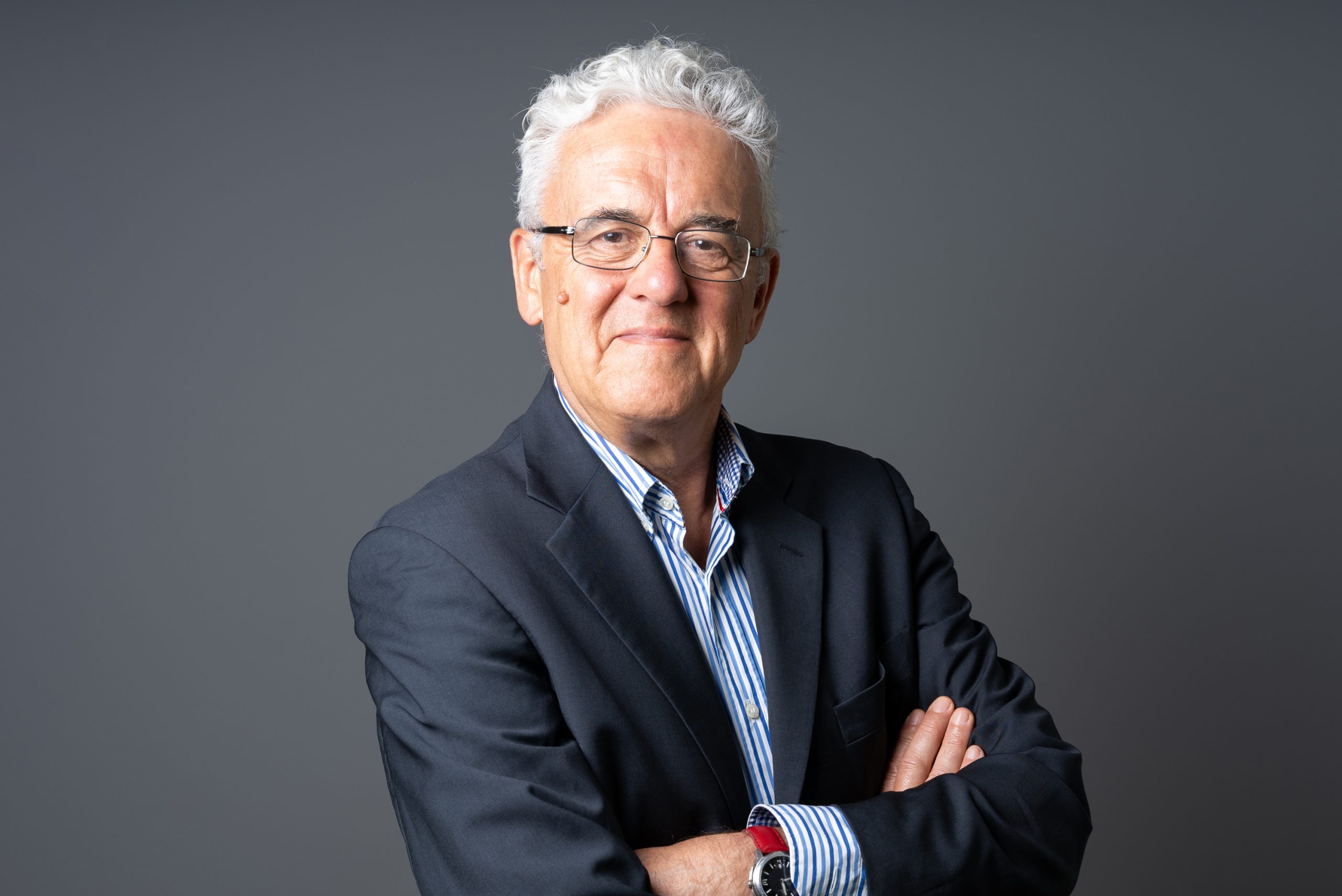
C88 was also the last meeting under the tenure of Mr. Nick Brown (CEO LR), whose term as Chair of the Association finishes at the end of the year and who will handle over to Mr. Roberto Cazzulo (RINA) on 1 January 2024.

Speaking after C88, the IACS Chair said

“I am delighted that IACS new governance arrangements, which saw me become the first elected Chair, have demonstrably improved the agility and responsiveness of IACS.  This has allowed us to launch the Safe Decarbonisation Panel (SDP) and the Safe Digital Transformation Panel which positions IACS well for the two major challenges of our time.  In combination with our efforts to embed Human Element considerations across the IACS work programme, we are now well positioned to quickly develop and publish common technical requirements necessary for the various alternative fuels and technologies and digital solutions that are being considered by the industry.”

Incoming Chair, Roberto Cazzulo stated “I am keen to become the IACS Council Chair for 2024-2025. In my experience, I have never seen a moment like this, with great challenges as well as great opportunities for class. A lot of work planned in the next couple of years within IACS will be about safe decarbonization and safe digitalization, contributing to the IMO strategy, not forgetting the human element and the role of surveyors and technical staff dealing with novel technologies.”


Contact: Robert Ashdown, IACS Secretary General
E: robertashdown@iacs.org.uk T: +44 (0) 20 7976 0660

International Association of Classification Societies
Permanent Secretariat 4 Matthew Parker Street, London, England SW1H 9NP

E: permsec@iacs.org.uk

T: +44 (0)20 7976 0660

Notes to Editors:

  1. Dedicated to safe ships and clean seas, the International Association of Classification Societies (IACS) makes a unique contribution to maritime safety and regulation through technical support, compliance verification and research and development. More than 90% of the world’s cargo carrying tonnage is covered by the classification design, construction and through-life compliance Rules and standards set by the twelve Member Societies of IACS.
  2. Roberto P. Cazzulo graduated in civil engineering from the University of Genoa (Italy) but he has spent almost his whole professional life in maritime regulatory affairs. He joined RINA in 1981 within the R&D Marine Division. Currently, he is Secretary General of Registro Italiano Navale, the RINA main shareholder. Since the ‘80s he has represented IACS and the Italian Administration at the IMO, for instance chairing the working group on the Human Element and Formal Safety Assessment of the Maritime Safety Committee, and contributing to the development of the International Safety Management Code and Goal Based Standards for ship construction. He chaired IACS in 2013-2014 when the Common Structural Rules for tankers and bulk carriers were adopted and submitted to the IMO for GBS verification. He has been elected chairman of the IACS Council for 2024-2025. A high resolution (3mb) portrait photo of Roberto Cazzulo is available at: Click here
  3. Ajay Asok Kumar is currently a member of General Policy Group (GPG) Chair Team in IACS Secretariat, London. Prior to this, he has held various positions at ClassNK in Japan as Manager of External Affairs Department, Senior Ship Surveyor, Management Systems Auditor and Plan Approval Engineer. He has also worked as a Senior Engineer at Mazagon Docks Ltd, India. He holds a Bachelor’s Degree in Naval Architecture & Ship Building from Cochin University of Science & Technology, India and Master’s & Doctoral Degrees in Environmental and Ocean Engineering from University of Tokyo, Japan. A photo of Dr. Ajay Asok Kumar can be found at Click here
  4. More information about IACS can be found by visiting iacs.org.uk and in our Annual Review available online at http://www.iacs.org.uk/about/iacs-annual-review/

IACS Launches New Recommendation to Promote Shipbuilding Quality of Machinery Piping Systems

The purpose of machinery piping systems is to convey different fluids at various temperatures and pressures to all parts of the ship, including to nearly every enclosed space on a vessel.  As such, and because these systems are a means through which many of a ship’s control systems operate, it is crucial that these systems are designed to meet high quality standards in order to mitigate against the possibility of failure.

In recognition of the need for uniform quality standards to be implemented across the shipbuilding industry, IACS has developed Rec.177 which provides comprehensive guidance on shipbuilding quality standards for machinery piping systems for use during a ship’s new construction phase.  This recommendation is designed to improve the quality standards of machinery piping systems in terms of fabrication, installation, commissioning and function tests as well incorporating remedial standards to address situations where the prescribed quality standards have not been met.  Furthermore, these standards can be applied to cover repairs/modifications and piping system retrofits onboard ships in service, so ensuring a through-life approach to enhancing and maintaining the quality standards of machinery piping systems.

Rec.177 focuses primarily on machinery piping systems covered by those Classification Society rules which address critical functions such as ship propulsion, electricity generation and navigational safety. Furthermore, this recommendation builds upon, and complements, IACS current Rec.47 which sets down guidance on ship-building quality standards for the hull structure itself.

Key highlights of the Rec.177 include:

I. Terminology: Clear and precise definitions related to machinery piping have been provided.

II. General Requirements:

  1. Qualification of welders/operators and Non-Destructive Testing (NDT) operators
  2. Procedures: Welding procedures (for metallic pipes) and plastic coating or lining procedures (for steel-plastic composite pipes), Procedures for bonding, NDT, and installation
  3. Requirements for Quality Management Systems of shipyards

III. Quality Standards: Detailed quality standards are outlined for the following items:

  1. Materials: General requirements, surface conditions, and remedial measures for defects
  2. Workshop Fabrication:
  • Cutting: Permitted cutting methods for different materials, roughness of cut edges, cut end perpendicularity, length tolerance.
  • Bending: Longitudinal weld seam arrangement, heat temperature range, post-heat treatment, minimum thickness, bending radius, bending surface quality, wall thickness thinning rate, roundness, reduction in cross-sectional area, creasing, angle deviation, shape, and position deviation.
  • Edge preparation and assembly: Cleaning, misalignment tolerance, distance between welds, tack weld, typical edge preparations
  • Preheating and Post-heat treatment of welding
  • Typical weld profile and weld surface quality
  • NDT and acceptance criteria: NDT methods, NDT requirements, acceptable standard levels
  • Weld remedy standards
  • Installation onboard: Pipe support, pipe support spacing, gap between piping, flushing.


Commenting on this new Rec.177, IACS Secretary General, Mr. Robert Ashdown said ‘The publication of Rec.177 is yet another example of IACS’ ongoing commitment to supporting the maritime industry through the development of guidelines that improve safety across all aspects of ship construction’.


Contact: Robert Ashdown, IACS Secretary General
E: robertashdown@iacs.org.uk T: +44 (0) 20 7976 0660

International Association of Classification Societies
Permanent Secretariat 4 Matthew Parker Street, London, England SW1H 9NP

E: permsec@iacs.org.uk

T: +44 (0)20 7976 0660

Notes to Editors:

  1. Dedicated to safe ships and clean seas, the International Association of Classification Societies (IACS) makes a unique contribution to maritime safety and regulation through technical support, compliance verification and research and development. More than 90% of the world’s cargo carrying tonnage is covered by the classification design, construction and through-life compliance Rules and standards set by the twelve Member Societies of IACS.
  2. More information about IACS can be found by visiting iacs.org.uk and in our Annual Review available online from here

IACS PARTICIPATION AT SDC 10

In demonstrating its ongoing commitment to supporting the work of the International Maritime Organization (IMO), and within its remit as the Organization’s principal technical advisor, IACS will actively participate in the forthcoming 10th session of the Sub-Committee on Ship Design and Construction (SDC 10) which will meet at the IMO Headquarters in London from Monday, 22 to Friday, 26 January 2024.

Noting the work IACS Members undertake as Recognized Organizations of IMO Member States, verifying compliance of ships with the IMO agreed requirements, and with a view to achieve clarity for all parties, IACS has submitted the following papers:

SDC 10/3/2 comments on paper SDC 10/3 and offers proposals on the preliminary draft guidelines for emergency towing arrangements for ships other than tankers as described in paragraphs 10 to 13 of SDC 10/3/2.

SDC 10/6 proposes draft amendments to the 2011 ESP Code, as amended by resolution MSC.483(103), with a view to allowing the use of remote inspection techniques (RIT) for close-up surveys of existing bulk carriers and oil tankers. IACS proposes to include a definition of RIT and specific requirements.

SDC 10/8 presents IACS’ view on paper MSC 105/18/1 and offers comments on the proposed amendments intended to address both rudder-type and modern combined propulsion/steering systems.

SDC 10/9 proposes draft amendments to MSC.1/Circ.1331 on the Guidelines for the construction, installation, maintenance and inspection/survey of means of embarkation and disembarkation. The following sections are proposed to be amended: section 1 – Application, section 2 – Construction, section 5.1.1.2 – Accommodation ladder, section 5.1.2.2 Gangway, section 5.2.2 – Winch, section 5.3.3 – Tests.

SDC 10/10 proposes a draft unified interpretation relating to means of internal communication equipment required in an emergency to be supplied from the emergency source of power in passenger ships as required by SOLAS regulation II-1/42.2.3.1, with a view to facilitating a consistent implementation.

SDC 10/10/1 proposes a draft interpretation of paragraphs 2.1 and 2.2 of the Code on noise levels on board ships (resolution MSC.337(91)) to clarify against which standard the calibration of the sound level meter and its field calibrator shall be carried out.

SDC 10/10/2 proposes a revision of MSC.1/Circ.1572/Rev.1 regarding unified interpretations of the Performance standards for water level detectors on bulk carriers and single hold cargo ships other than bulk carriers (resolution MSC.188(79)) consequential to the adoption of resolution MSC.188(79)/Rev.2.

SDC 10/10/3 proposes a unified interpretation of SOLAS chapter XV and the IP Code to clarify with which SOLAS safety certificates the IP Safety Certificate should be harmonized in terms of validity, survey dates and endorsements, with a view towards universal and uniform implementation.

SDC 10/10/4 proposes a revision of MSC.1/Circ.1511 on the Unified interpretations of SOLAS regulations II-2/9 and II-2/13 to clarify the term “safe position” used in connection with means of escape from machinery spaces.

SDC 10/10/5 proposes revisions to sections 1.4 and 1.5 of the annex to   MSC.1/1572/Rev.1 in respect of the interpretation (including procedures and technical background) of SOLAS regulations II-1/3-6.2.3 and II-1/3-6.3.1 related to permanent means of access.

SDC 10/INF.8 provides information on the observed “near miss” safety incident with the permanent means of access, in support of the proposals in document SDC 10/10/5.

SDC 10/12/2 comments on the proposals in document SDC 10/12 (Germany et al.), in particular with regard to addressing the fire testing of the FRP structures and informs about the experience of IACS members leading to the conclusion on the need for improvement in the current testing regime for fire performance of composite structures.

SDC 10/14 proposes to transfer the output “Review of the 2009 Code on Alerts and Indicators” from the SSE Sub-Committee onto the provisional agenda of SDC 11.

IACS will also provide advice and comments to the Sub-Committee on a number of other issues, both in plenary and in the Working Groups that are expected to be established. IACS will contribute to the discussions also on agenda item 7 (Safety objectives and functional requirements of the Guidelines on alternative design and arrangements for SOLAS chapter II-1), agenda item 11 (Amendment to regulation 25 of the of the 1988 Load Line Protocol regarding the requirement for setting of guard rails on the deck structure), agenda item 13 (Revision of the Interim explanatory notes for the assessment of passenger ship systems’ capabilities after a fire or flooding casualty (MSC.1/Circ.1369) and related circulars), and agenda item 16 (Any other business).

Any enquiries on the above should be sent to Konstantin Petrov, IACS Accredited Representative to IMO, at arimo@iacs.org.uk

IACS Adopts New Unified Requirement (URH1) on Control of Ammonia Releases on Ammonia Fuelled Vessels

As the maritime industry forges ahead with its efforts to meet the goal of net zero emissions by 2050, IACS continues to provide strong support by facilitating the safe adoption of the technological innovations, zero carbon fuels and alternative energy sources that are fundamental to achieving this ambitious target.

In recent years, ammonia has emerged as one of a number of promising carbon-free fuels due to its high energy density and its ability to be liquefied at ambient temperatures. While ammonia therefore has a significant potential as a marine fuel it also presents safety challenges as it is highly toxic to human and aquatic life and it is therefore imperative to address the permissible limits to human exposure in ensuring the safety of onboard personnel.

In light of this and with the aim of guiding the industry in its development of early projects using Ammonia as fuel, IACS has developed a Unified Requirement (URH1) covering the release of ammonia from the onboard systems for bunkering, storing, preparing and using ammonia as fuel.

IACS URH1 aligns with the Recommendations from U.S. National Institute for Occupational Safety and Health (NIOSH) and establishes that an Ammonia concentration of 300 ppm or more is immediately dangerous, and a concentration of 25 ppm or more is dangerous if the exposure is longer than 8 hours. Additionally, it requires the system dealing with ammonia to be designed so as to prevent a direct release of ammonia to the atmosphere during normal operation and also, when possible, during any reasonably foreseeable abnormal scenario.

In situations where a direct release is unavoidable under either a normal or abnormal scenario (such as the activation of a tank pressure relief valve), the points where ammonia is expected to be released are required to be identified by the designer in a risk assessment and to be listed in the ship design documentation. The concentration resulting from such releases must not exceed a safe concentration (25 ppm) at locations of the ship accessible to the crew and this is to be demonstrated through gas dispersion analysis.  This requirement is expected to result in the establishment of “toxic areas” (similar to hazardous areas on tankers) with access restrictions and other precautions, such as the absence of air intakes in that area.

URH1 further requires the point at which ammonia is released to the atmosphere, (e.g. outlet of vent mast) to be provided with audible and visual alarms, which are to be activated when the discharged gas has an ammonia concentration of 300 ppm or more, to warn people to promptly leave the area and seek refuge.

Gas dispersion analyses are required to be carried out for abnormal and emergency scenarios identified by way of a risk assessment. Depending on the results of these analyses, measures will have to be taken to prevent the crew onboard from being exposed to dangerous concentrations of ammonia. The spaces where all reasonably foreseeable ammonia leaks may occur (e.g. secondary enclosure, fuel preparation room), even if not normally manned, are to be monitored and the source of the release should be shut down when a concentration exceeding 300 ppm is detected.

In other work relating to the use of Ammonia as a fuel, IACS is also working on Requirements for ammonia treatment systems (equipment intended to reduce the concentration and/or quantity of released ammonia), and Requirements for Gas dispersion analysis.

Other safe decarbonisation-related work underway in IACS includes developing Requirements for the selection and testing of materials and equipment, including portable tanks, for the use of Hydrogen as fuel, and Requirements on electrical energy storage systems, including a Type Approval standard for Lithium-based batteries.

Commenting on the publication of URH1, IACS Secretary General, Mr. Robert Ashdown said ‘URH1 on the control of ammonia releases on ammonia fuelled vessels is a first, but significant, step in providing industry with enhanced levels of assurance for this new fuel type and will be supplemented with further complementary guidance in due course.  This work, together with the other work-streams underway within our Safe Decarbonisation Panel, demonstrates IACS’ strong commitment to ensuring that safety remains at the forefront of the maritime industry’s efforts to meet its decarbonisation targets.’


Contact: Robert Ashdown, IACS Secretary General
E: robertashdown@iacs.org.uk T: +44 (0) 20 7976 0660

International Association of Classification Societies
Permanent Secretariat 4 Matthew Parker Street, London, England SW1H 9NP

E: permsec@iacs.org.uk

T: +44 (0)20 7976 0660

Notes to Editors:

  1. Dedicated to safe ships and clean seas, the International Association of Classification Societies (IACS) makes a unique contribution to maritime safety and regulation through technical support, compliance verification and research and development. More than 90% of the world’s cargo carrying tonnage is covered by the classification design, construction and through-life compliance Rules and standards set by the twelve Member Societies of IACS.
  2. More information about IACS can be found by visiting iacs.org.uk and in our Annual Review available online at here

IACS 2024 BLUE BOOK LAUNCHED

The International Association of Classification Societies is pleased to announce the release of the 2024 edition of its IACS Blue Book.

The latest release of the Blue Book package continues to enhance IACS technical support to the shipping industry through our work and investment in technology, innovation, research and development both at the classification and statutory levels.

The IACS Blue Book is an electronic library of all technical resolutions adopted by IACS as a result of its technical work and remains the core reference work for the Association containing, as it does, all previous revisions of IACS publications and historical data. It is updated and published once a year. Together, these IACS publications illustrate well how the aims and objectives of IACS are delivered for the benefit of international shipping and contain:

  • IACS Unified Requirements which IACS members incorporate into their Rules.
  • Unified Interpretations of IMO convention requirements which IACS Members apply uniformly when acting on behalf of authorizing flag Administrations, unless instructed otherwise.
  • Procedural Requirements governing practices among IACS Members.
  • Recommendations relating to adopted resolutions that are not necessarily matters of Class but which IACS considers would be helpful to offer some advice to the marine industry.
  • Quality Documents containing QSCS (IACS’ Quality System Certification Scheme) description, Quality Management System Requirements, Audit Requirements, ACB (Accredited Certification Bodies) requirements and other quality procedures.
  • IACS Charter and IACS Procedures which define the purpose, aim and working procedures of the Association.

These publications are of interest to Ship Designers, Consultants, Shipbuilders, Classification Societies, Ship-owners, Shipbrokers, Insurers, Associations, Accredited Certification Bodies, flag States, Port State Control, MOUs and the shipping industry at large and are available for download, free of charge, at here


Contact: Robert Ashdown, IACS Secretary General
E: robertashdown@iacs.org.uk T: +44 (0) 20 7976 0660

International Association of Classification Societies
Permanent Secretariat 4 Matthew Parker Street, London, England SW1H 9NP

E: permsec@iacs.org.uk

T: +44 (0)20 7976 0660

Notes to Editors:

  1. Dedicated to safe ships and clean seas, the International Association of Classification Societies (IACS) makes a unique contribution to maritime safety and regulation through technical support, compliance verification and research and development. More than 90% of the world’s cargo carrying tonnage is covered by the classification design, construction and through-life compliance Rules and standards set by the twelve Member Societies of IACS.
  2. More information about IACS can be found by visiting iacs.org.uk and in our Annual Review available online at here

IACS PARTICIPATION AT SSE 10

In demonstrating its ongoing commitment to supporting the work of the International Maritime Organization (IMO), and within its remit as the Organization’s principal technical advisor, IACS will actively participate in the forthcoming 10th session of the Sub-Committee on Ship Systems and Equipment (SSE 10) which will meet from 4 to 8 March 2024. 

Noting the work IACS Members undertake as Recognized Organizations of IMO Member States, verifying compliance of ships with the IMO agreed requirements, and with a view to achieve clarity for all parties, IACS has submitted or co-sponsored the following 17 papers:

SSE 10/4 proposes amendments to paragraph 4.7.6.4 of the LSA Code; consequential draft amendments to paragraphs 6.9.7 (Part 1) and 6.1.1 (Part 2) of resolution MSC.81(70) to address the design and prototype test requirements for the equipment used in the simulated launching of free-fall lifeboats; and consequential amendments to MSC.1/Circ.1529 to expand its application to paragraph 4.7.6.4 of the LSA Code.

SSE 10/10/1 provides information on the technical evaluation of the CARGOSAFE FSA study, performed by IACS, and IACS’ initial deliberations on the risk mitigating measures proposed therein.

SSE 10/12 proposes a draft interpretation of SOLAS regulation II-2/11.4.1 with a view to ensuring consistent implementation of this provision for passenger ships and cargo ships.

SSE 10/12/1 proposes a unified interpretation of SOLAS regulation II-2/4.2.2.3.5.2.1 regarding acceptable equivalent arrangements.

SSE 10/12/2 proposes a unified interpretation regarding the fitting of the small-diameter self-closing control cock required by SOLAS regulation II-2/4 on sounding pipes in certain tanks.

SSE 10/12/5 proposes a unified interpretation on the secondary means of venting cargo tanks required by SOLAS regulation II-2/4.5.3.2.2, as amended by resolution MSC.392(95), and SOLAS regulation II-2/11.6.3.2 to achieve a unified understanding and implementation on board.

SSE 10/12/6 proposes a draft unified interpretation of SOLAS regulation II-1/3-13.2.4 to facilitate uniform documentation of load testing and thorough examination for existing non-certified lifting appliances.

SSE 10/12/7 provides comments on document SSE 10/14 relating to the proposed interpretations of paragraphs 6.1.1.3 and 6.1.2.2 of the LSA Code, with a view towards universal and uniform implementation.

SSE 10/12/8 provides comments on document SSE 10/14 relating to the applicability of SOLAS regulation III/20.11 and resolution MSC.402(96) to inflated rescue boats, with a view towards universal and uniform implementation.

SSE 10/12/9 provides comments on document SSE 10/12/3, providing information on the outcome of SSE 9 and MSC 107 on single essential propulsion components and their reliability.

SSE 10/14/1 provides comments on paragraphs 13 to 16 and annex 2 to document SSE 10/14 relating to the identified safety issues and barriers to consistent implementation of resolution MSC.402(96), with a view towards prioritizing the issues and establishing relevant solutions.

SSE 10/17 proposes to start the work on the output “Review of the 2009 Code on Alerts and Indicators” in the 2024-2025 biennium. It currently resides with the SSE Sub-Committee as the coordinating organ and it is proposed to transfer it to the provisional agenda of SDC 11.

SSE 10/17/1 proposes to include the output “Review and update SOLAS regulation II-2/9 on containment of fire to incorporate existing guidance and clarify requirements” in the provisional agenda for SSE 11.

SSE 10/17/2 proposes to include the output “Development of amendments to chapter 6 of the 2009 MODU Code regarding electrical equipment capable of operation after shutdown” in the provisional agenda for SSE 11.

SSE 10/17/3 proposes to include the output ʺDevelopment of amendments to chapter 15 of the FSS Code on enclosed spaces containing a nitrogen receiver or a buffer tank of nitrogen generator systemʺ in the provisional agenda for SSE 11.

SSE 10/19 proposes minor corrections to SOLAS regulations II-2/11.2 and II-2/11.4.1 with a view to ensuring consistent implementation of this provision for passenger ships and cargo ships.

SSE 10/19/4 proposes to include the output “Development of amendments to chapter 6 of the 2009 MODU Code regarding electrical equipment capable of operation after shutdown” in the provisional agenda for SSE 11.

IACS will also provide advice and comments to the Sub-Committee on a number of other issues, both in plenary and in the Working and Drafting Groups that are expected to be established.

Any enquiries on the above should be sent to Mr Konstantin Petrov, IACS Accredited Representative to IMO, at arimo@iacs.org.uk

IACS PARTICIPATION AT MEPC 81

In demonstrating its ongoing commitment to supporting the work of the International Maritime Organization (IMO), and within its remit as the Organization’s principal technical advisor, IACS will actively participate in the forthcoming 81st session of the IMO’s Marine Environment Protection Committee (MEPC 81), which will meet at the IMO Headquarters in London, from Monday 18 to 22 March 2024.

Noting the work IACS Members perform as Recognized Organizations of IMO Member States, verifying compliance of ships with IMO agreed requirements, and with a view to achieve clarity for all parties, IACS co-sponsored the following papers:

MEPC 81/3/6 comments on the draft amendments to MARPOL Annex VI regulation 13.2.2. The co-sponsors noted that the proposed amendments refer to “a Party”, which follows the precedent in paragraph 7.1 of the same regulation. However, the paper clarifies that since the matter involves conversion of ships in service, the decision must be made by the flag Administration, i.e. “the Administration”, not “a Party” to the convention. The same applies to the draft 2023 Guidelines as required by regulation 13.2.2, in respect of non-identical replacement engines not required to meet the Tier III limit and the unified interpretation and guidelines given in the draft revision of circular MEPC.1/Circ.795.

MEPC 81/4/6 provides draft guidance for the temporary storage of treated sewage and grey water in ballast water tanks. It takes into consideration related documents drafted for and discussed in prior sessions and seeks to incorporate such considerations into a revised guidance for the Committee’s consideration and action as needed.

MEPC 81/6/7 proposes a correction to the definition of capacity appearing in the CII Guidelines, G5, to clarify an identified discrepancy between the 2022 Guidelines on operational carbon intensity indicators and the calculation methods (CII Guidelines, G1) and the 2022 Interim Guidelines on correction factors and voyage adjustments for CII calculations (CII Guidelines, G5).

IACS will also contribute to the deliberations under agenda item 5 (Air Pollution Prevention).

Any enquiries on the above should be sent to Mr Konstantin Petrov, IACS Accredited Representative to IMO, at arimo@iacs.org.uk

IACS Publishes 2023 Annual Review

Report highlights IACS contribution on technical standards and guidance in support of safe innovation on digitalisation and decarbonisation

IACS, the membership organisation for the world’s leading classification societies, has published its 2023 IACS Annual Review, which is now available to download at here.

This year’s Annual Review includes a broad range of articles highlighting IACS’ work in 2023, with a strong emphasis on the significant advancements made in alternative fuels. This includes the development of a new Unified Requirement on the release of ammonia from ammonia fuelled vessels, and the newly established Safe Digital Transformation Panel that focuses on the safety implications of increasingly digitised ships, together with IACS’ engagement with the industry on existing and emerging technical challenges.

The Annual Review also sheds light on IACS’ role in fostering technical cooperation and support to the IMO and its Member Flag States in advancing the safety of decarbonisation and related fields.

This edition of the annual review also has an array of in-depth technical articles on the loss of containers at sea, Underwater Radiated Noise, Rec 177 on Shipbuilding and Remedial Quality Standard for Machinery Piping Systems, along with updates on Quality and EU Matters, to name but a few.

Robert Ashdown, IACS Secretary General, said:

“2023 was a busy, productive year for IACS, in which we continued to share our expertise and knowledge on a wide range of technical and regulatory matters. Much of this focused the safe development and deployment on alternative fuels, in support of shipping’s decarbonisation, as well as addressing the safety considerations of shipping’s digital transformation. Through our standards and guidance, IACS and our members are playing an integral role in putting safety at the heart of shipping’s innovation, and our Annual Report highlights the breadth of our work during the past year.”

The Annual Review also includes details of all the new, updated, and deleted IACS Resolutions in 2023, as well as information on IACS’ numerous submissions to IMO and our ‘Class Report’, which contains data on the IACS fleet.

Please contact the IACS Permanent Secretariat at permsec@iacs.org.uk if you would like a hard copy of the 2023 Annual Review.

Contact: Robert Ashdown, IACS Secretary General
E: robertashdown@iacs.org.uk T: +44 (0) 20 7976 0660

International Association of Classification Societies
Permanent Secretariat 4 Matthew Parker Street, London, England SW1H 9NP

E: permsec@iacs.org.uk

T: +44 (0)20 7976 0660

Notes to Editors:

  1. Dedicated to safe ships and clean seas, the International Association of Classification Societies (IACS) makes a unique contribution to maritime safety and regulation through technical support, compliance verification and research and development. More than 90% of the world’s cargo carrying tonnage is covered by the classification design, construction and through-life compliance Rules and standards set by the twelve Member Societies of IACS.
  2. More information about IACS can be found by visiting iacs.org.uk and in our Annual Review available online at here.

IACS Publishes New Recommendation for Conducting Commissioning Testing of Ballast Water Management Systems

In a significant stride towards environmental sustainability and compliance with maritime regulations, IACS has published a new recommendation, Rec. 180, for Conducting Commissioning Testing of Ballast Water Management Systems.

Ballast water, a key component of safe and efficient shipping operations, has long posed a risk to maritime ecosystems due to its potential for transferring harmful aquatic organisms and invasive species. As the maritime industry continues to address the negative effects associated with ballast water transfer, the effective implementation and proper functioning of Ballast Water Management Systems (BWMS) is paramount. Efforts to streamline the implementation of BWM Convention took a significant step forward with IMO’s approval of the “2020 Guidance for the commissioning testing of BWMS” and IACS has now further bolstered these efforts with the development of a comprehensive Recommendation (Rec. 180) to facilitate the smooth, effective, and harmonised implementation of commissioning tests requirements in line with the international regulations.

The guidance in Rec. 180 facilitates a uniform approach to conducting the commissioning tests of BWMS by verifying that the ballast water is being discharged in accordance with the D-2 standard of the BWM convention and by an assessment of the proper operation of the self-monitoring equipment. Commissioning tests conducted during an initial survey (and any subsequent additional survey which could be triggered by significant changes, replacements, or repairs to the BWMS), play a crucial role in validating the proper functioning of all mechanical, physical, chemical, and biological processes within the system, effectively mitigating the risk of ecological damage to the marine ecosystem.

Derived from practical experience and feedback gathered by IACS following the approval of IMO’s 2020 guidance, the recommended practices in Rec. 180 include essential preparation steps that allow ship operators to ensure the seamless and efficient execution of commissioning tests and the establishment of industry-wide best practices for ballast water management.  In addition, the utilization of recommended reporting forms outlined in the guidelines significantly enhances transparency throughout the testing process and ensures all stakeholders are not only kept informed but are also actively involved.

Commenting on this new Rec. 180, IACS Secretary General, Mr. Robert Ashdown said, “IACS’ Rec. 180 marks a further contribution to the safeguarding of the marine environment by streamlining the commissioning testing of Ballast Water Management Systems.  Commissioning testing plays a crucial role in validating the proper functioning of the BWMS, in mitigating the risks of ecological damage caused by the introduction of non-native species and in ensuring compliance with the IMO regulations.  Adopting Rec. 180 can also provide the basis for industry best practice in this area.”

Contact: Robert Ashdown, IACS Secretary General
E: robertashdown@iacs.org.uk T: +44 (0) 20 7976 0660

International Association of Classification Societies
Permanent Secretariat 4 Matthew Parker Street, London, England SW1H 9NP

E: permsec@iacs.org.uk

T: +44 (0)20 7976 0660

Notes to Editors:

  1. Dedicated to safe ships and clean seas, the International Association of Classification Societies (IACS) makes a unique contribution to maritime safety and regulation through technical support, compliance verification and research and development. More than 90% of the world’s cargo carrying tonnage is covered by the classification design, construction and through-life compliance Rules and standards set by the twelve Member Societies of IACS.

More information about IACS can be found by visiting www.iacs.org.uk and in our Annual Review available online at https://iacs.org.uk/about-us/annual-review

IACS PARTICIPATION AT MSC 108

In demonstrating its ongoing commitment to supporting the work of the International Maritime Organization (IMO), and within its remit as the Organization’s principal technical advisor, IACS will actively participate in the forthcoming 108th session of the Maritime Safety Committee (MSC 108), which will meet from Wednesday, 15 May to Friday, 24 May 2024.

Noting the work IACS Members undertake as recognized organizations of IMO Member States, verifying compliance of ships with IMO agreed requirements, and with a view to achieving clarity for all parties, IACS has submitted and co-sponsored the following papers:

MSC 108/4/4 outlines the work IACS has undertaken to assess, consolidate and standardize the vocabulary relevant to MASS to support the verification and validation of MASS systems, as contained in the annexes of this document;

MSC 108/INF.11 informs about IACS Recommendation No.171 on incorporating cyber risk management into safety management systems;

MSC 108/6/1 highlights the increasing vulnerability of the maritime industry to cyberattacks due to increased digitalization and connectivity and provides an insight into existing instruments. The document proposes improvements to MSC-FAL.1/Circ.3/Rev.2 to provide further guidance which could be helpful to the maritime industry;

MSC 108/14/1 proposes to move forward the timeline for entry into force of the draft amendment to paragraph 16.9.2 of the IGC Code set out in annex 2 of document CCC 9/WP.4, through approval of the draft amendment at this session; earlier entry into force of the amendment, as an exceptional circumstance defined in MSC.1/Circ.1481; and issuance of an MSC circular inviting voluntarily implementation of the amendment based on MSC.1/Circ.1565;

MSC 108/19/3 discusses the approach by IACS to the development and submission to IMO of unified interpretations (UIs) and opines that approval of IMO UIs by “consensus” as opposed to by “unanimity” offers tangible benefits to IMO and the shipping industry in achieving their common goal of safe shipping, in a universal and uniform manner, as well as assisting the Organization with managing its workload;

MSC 108/19/6 provides explanations on and background for the review of the North Atlantic wave data (IACS Recommendation 34/Rev.2) and addresses several concerns expressed in document MSC 108/19 as related to the new data.

Any enquiries on the above should be sent to Mr Konstantin Petrov, IACS Accredited Representative to IMO, at arimo@iacs.org.uk